

Steal This Deck: The 2026 B2B Marketing Edge
Based on insights from the 2026 B2B Marketing Edge report
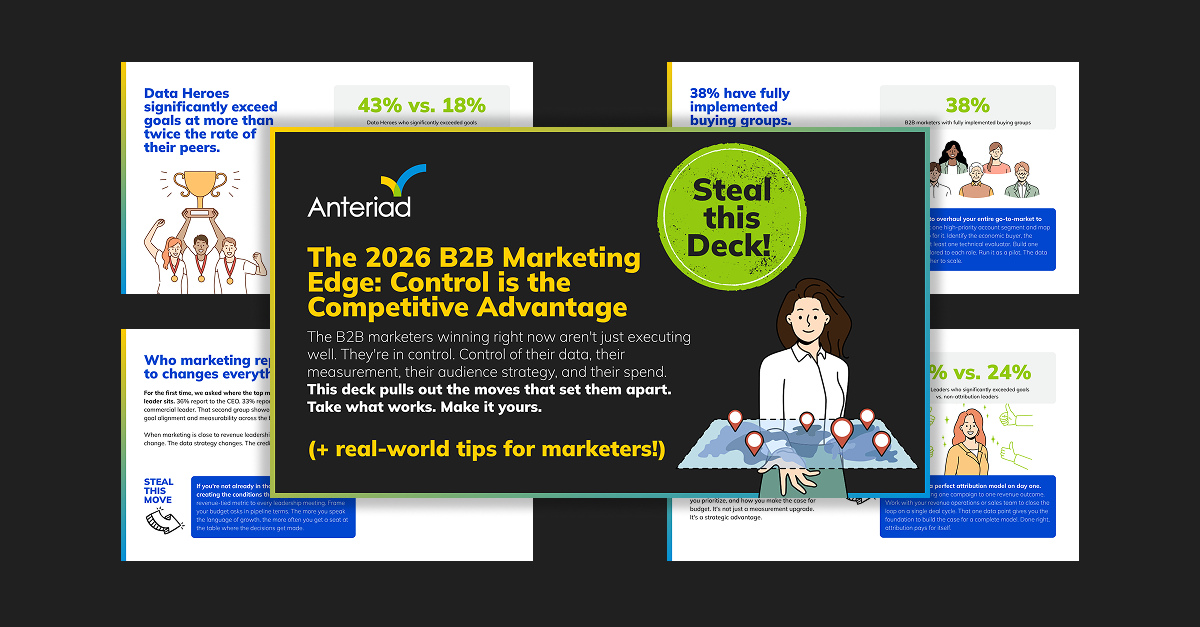
Yes, stealing is encouraged here. (We built it that way.)
We surveyed 631 B2B marketing decision-makers across the United States, United Kingdom, and APAC to find out what the best marketers are doing differently in 2026. The answer? Control. Control of their data, their measurement, their audience strategy, and their spend.
This deck pulls the moves that separate the top performers from the rest and packages them into slides you can use right now. Drop them into your next board deck, strategy review, or team meeting and show up with the numbers behind you.
Don't overthink it. Just steal it.
What's inside:
- The stat that reframes the budget conversation: revenue growth dropped while budgets went up
- How Data Heroes exceed goals at more than twice the rate of their peers
- Why only 38% have implemented buying groups, and what they're winning because of it
- What full-funnel attribution actually does for your goal attainment
- The system fix that makes mid-campaign agility possible
- What reporting structure has to do with measurability and results
Ready to put these moves to work?
Anteriad's team helps B2B marketers build the data foundation, execution, and measurement that turn research into results. Let's talk about what's possible.
Checklist: How to Develop a Demand Strategy

We all face the same challenges when it comes to driving demand: we can develop great strategies, but budget and resource constraints often get in the way. However, there are proven measures to help ensure success.
When creating your strategy:
Start with data to lay out your goals
- Look across your channels and segments and identify where you are not meeting your goals.
- Select 1-2 of those deficient areas to focus your resources.
Set realistic KPIs that you can grow over time
- Choose 2-3 KPIs per area you are looking to improve.
- Project what success looks like in one quarter, two quarters, and one year and make those your goals.
Identify your target audience
- Leverage intent data and partner with sales to identify the most promising prospect accounts.
- Review accounts that may be coming back to your site multiple times but haven’t engaged yet.
Define the customer experience
- Use existing data to pinpoint the channels and content to create the experience you want for your prospects.
- Create/repurpose content.
- A/B test your content message.
- Ensure that the content you are putting into your channels match the on-page landing experience.
- Ungate your content; leverage your web tools and marketing/sales tech stack to identify accounts and their behavior.
Run your campaign
- Set up your measurement tools (Google Analytics, Google Data Studio, Marketo/Eloqua dashboards, etc.) and keep them updated.
- Put your content into market through your channels.
- Gather data to determine what worked and what didn’t – and why.
Optimize and scale
- Use the data from your measurements to adjust your channels and tactics where you didn’t meet your goals.
- Continue doing what works and grow your target audience and customer experience
- Add new channels for scale.
- Run for another quarter.
Identify your next area for funnel optimization
- Find prospects who have moved successfully through the current funnel stage and repeat the above steps to create a campaign that moves them to the next stage.
- Identify where you aren’t realizing your conversion metrics and repeat the above steps to create a new experience.
By following this process, you will have a repeatable path to demand success. Because your business is unique, some of the steps outlined will be more important than others, but whatever your needs, ensuring each step is taken will guide the planning and execution of your demand programs.
To learn more, read our ebook, How to Develop a Demand Strategy.