


Optimize reach across channels with our self-service solutions, featuring high-fidelity B2B data and custom audiences.



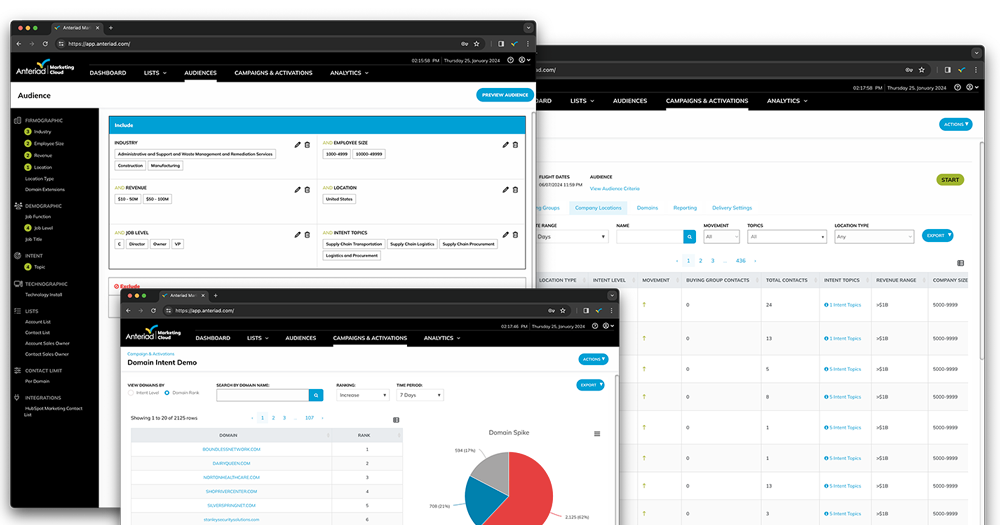


Go-to-Market (GTM) singularity describes the collapse of traditional boundaries between brand and demand, marketing and sales, data and execution into one connected go-to-market motion.
It was the defining theme of this year's Forrester B2B Summit, and the data Forrester presented makes a compelling case that this shift is already underway. AI-powered conversational search now ranks as the single most meaningful source of information across every phase of the B2B purchase journey, ahead of vendor websites, peer recommendations, and classic search. For demand gen teams, that means the real competition is happening earlier, and in places most programs aren't built to reach.
We came back from Phoenix with a lot to think about. Here's what stood out most.
When Does a B2B Buyer Actually Decide? Earlier Than You Think.
Here's the stat that stopped the room. According to Forrester's 2025 Buyers' Journey Survey, 68% of B2B buyers already have a preferred vendor when the formal buying process begins. Of those, 80% select that vendor. Do the math and more than half of B2B deals are effectively decided before a sales conversation ever happens.
The buyer's journey has become a process of confirmation, not selection. By the time a prospect fills out a form or takes a meeting, they're not evaluating you. They're validating a choice they've already made.
The real competition happens in the weeks and months before a buyer ever raises their hand, not in the pipeline review.
How Are B2B Buyers Using AI to Research Vendors Right Now?
Forrester's 2025 Buyers' Journey Survey also found that 94% of B2B buyers now use generative AI tools throughout the buying process, and AI-powered conversational search ranked as the single most meaningful source of information across every phase of the purchase journey, ahead of vendor websites, peer recommendations, and classic search.
That’s not just a prediction, it’s what’s happening right now. And it means your brand has to show up, with authority and credibility, in places buyers are researching long before you know they exist. Content that answers real buyer questions. Third-party validation that AI can surface. Proof points that hold up to scrutiny, not just claims.
Forrester's data reinforces this: 85% of brand mentions in AI-powered search come from third-party sources. What others say about you carries more weight than what you say about yourself. That's a significant shift for how demand gen teams think about content strategy and where they invest.
How Many Stakeholders Are Actually Involved in a B2B Buying Decision?
Your buyers aren't individuals and that adds to the challenge. Forrester estimates the average B2B buying group includes 13 internal stakeholders and 9 external influencers, each playing a distinct role in the decision. The champion who loves your pitch can't close the deal alone. The ratifier in procurement can stall it. A new CFO stepping in three months into a sales cycle can reset criteria that were already settled.
Most demand gen programs are still optimized for a single lead. A name in a form or a title in a sequence, but that's not how decisions are made. This gap between how marketers target and how buyers actually buy is where pipeline goes to die.
Buying groups don't announce themselves. They research, they compare, they signal. The teams winning right now are the ones identifying the full group early, reaching every stakeholder with relevant messaging, and staying accurate as the group shifts. Because it will shift. Our data team sees meaningful contact and role changes occurring within months, not quarters. In high-growth industries, 25 to 40% of buying group members can change within six months. The map you build today has a shelf life shorter than most marketers expect.
How Are Brand and Demand Finally Becoming the Same Motion?
Forrester called this "preference marketing." The goal isn't to win the deal at the moment of decision. It's to be the preferred vendor before the formal process even starts, by building early affinity, credibility, and trust across the right buying group members, consistently, over time.
That requires brand and demand to operate as one motion. Brand builds the awareness and trust that gets you onto shortlists buyers form before they talk to anyone. Demand reaches the right people at the right moment with the right proof. Neither works as well without the other, and the teams treating them as separate functions with separate budgets are fighting a losing battle.
What Does Preference Marketing Actually Look Like for Demand Gen Teams?
GTM singularity isn't just a strategic concept. It has direct implications for how demand gen teams operate:
- Stop targeting titles, start reaching buying groups. The person with the right job title isn't necessarily the person driving the decision. Buying group profiles that map real stakeholder roles give you a far more accurate picture of who actually needs to be in your program.
- Build early visibility. If buyers are using AI to research before they visit your website, your content needs to answer the questions they're actually asking. Authority and third-party validation carry more weight than they ever have.
- Treat data as a living system. The buying group you mapped last quarter may look significantly different today. Static contact lists and outdated intent signals don't just reduce efficiency. They send your programs to the wrong people entirely.
- Connect execution to intelligence. A campaign that runs without closed-loop analytics is a campaign you can't improve. Understanding which stakeholders engaged, which channels performed, and what the data tells you about next quarter separates teams that get lucky from teams that build repeatable pipeline.
What Should Demand Gen Teams Do Next?
GTM singularity can sound daunting. But the summit left us genuinely energized, because the teams who adapt early have a real advantage. When most of your competitors are still chasing individual leads through fragmented programs, showing up with coordinated buying group coverage and a brand buyers already recognize is a significant edge.
The B2B buying journey has changed. Buyers start with AI, stay invisible until they're nearly decided, and move in groups. The old playbook isn't broken. It's just not built for this.
Ready to get ahead of it? Our eBook, Don't Be Late to the Party: A Data-First Strategy for Marketing to Buying Groups, covers exactly how to identify the right stakeholders, keep your data current as groups shift, and build the kind of pipeline you can actually defend. Download it here.